
Denton County Is Booming - Here's What That Means for Your Debris
Denton County is one of the fastest-growing counties in the country, and all that construction, renovation and teardown activity has to be hauled and disposed of properly.
In this guide
- One of the fastest-growing counties
- New builds, teardowns and remodels
- The debris has to go somewhere
- Recycling and diversion
- Sizing a growth-driven job
Drive around Denton County and you can see it: new subdivisions, additions, teardowns and remodels going up everywhere. That growth is the backdrop to a lot of the waste work here, and it changes how a project's debris has to be handled.
One of the fastest-growing counties
Denton County is consistently among the fastest-growing counties in the United States, and regional planners project the wider Dallas-Fort Worth metroplex will add millions more people in the coming decades. More people means more building, more remodeling and more teardowns - and a great deal more construction and demolition debris.
New builds, teardowns and remodels
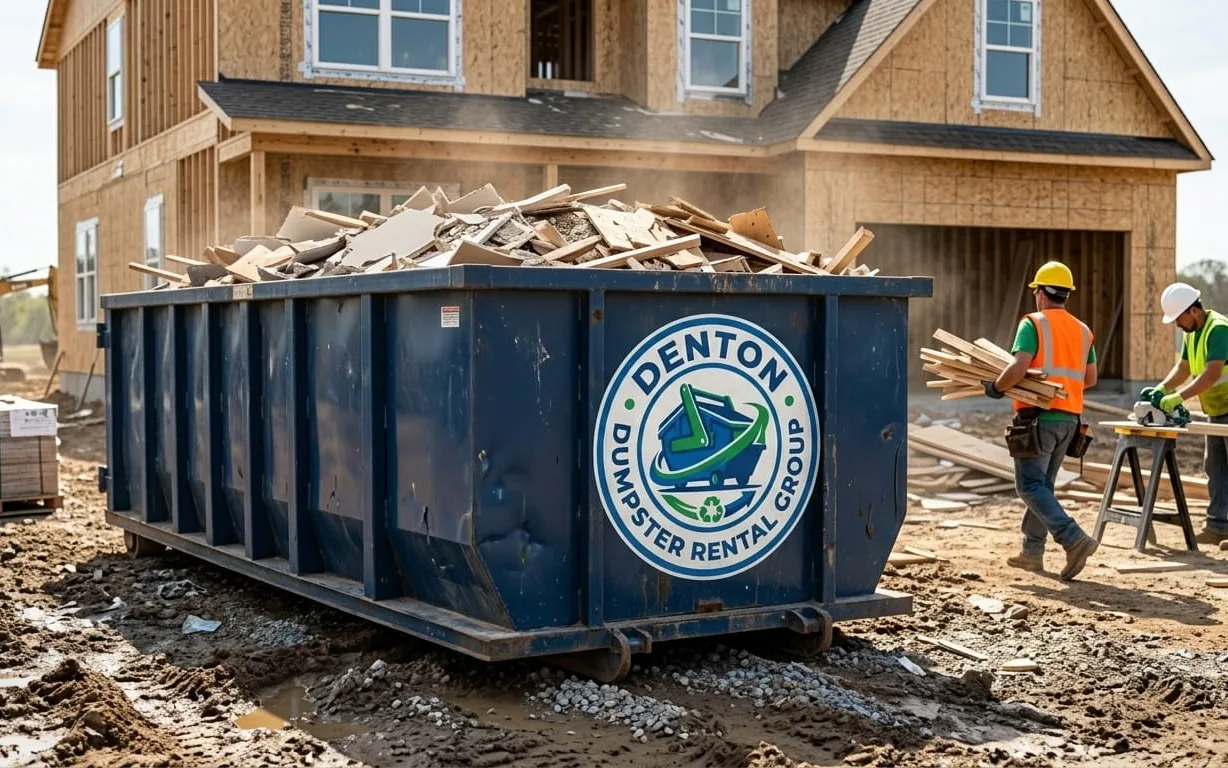
That growth shows up as three kinds of job. New construction and additions produce bulky, light offcuts and packaging that fill a large container on volume. Teardowns and gut renovations of older homes give up dense, heavy material. And the steady churn of remodels as buyers update newly bought homes fills a mid-sized box with mixed debris. Each wants a different container.
The debris has to go somewhere
Whatever the job, the debris is the property owner's and contractor's responsibility to haul - the city trash won't take it, and open burning is restricted. It goes to the City of Denton Landfill, a short local haul, under a covered load. A roll-off is simply how that happens without it piling up on the site or the curb.
Recycling and diversion
Denton takes recycling seriously, and its ordinance asks commercial properties to run a diversion program. On a construction job that means keeping the clean concrete, metal and cardboard separated so they can be recycled rather than landfilled. It's good practice and it can lower your disposal cost - and a local hauler helps set it up.
Sizing a growth-driven job
New-build and big-remodel debris is usually bulky and light, so it wants a 30 or 40 yard. But if there's a slab, a foundation or a driveway coming out, that heavy black-clay-and-concrete spoil needs its own dedicated 10 yard so nothing goes over legal weight. Tell us the phase and material and we'll match the container - and run swaps so the crew never stops.
Book a container in Denton
One flat rate covering delivery, seven days, pickup and disposal.
(940) 220-3684Questions readers ask about this
Is Denton County really growing that fast?
Yes - it's consistently among the fastest-growing counties in the country, and the wider metroplex is projected to add millions more people. That drives constant construction, renovation and teardown work.
Where does all the construction debris go?
To the City of Denton Landfill, a short local haul under a covered load. Construction debris is the owner's responsibility and can't be left at the curb or burned.
Do I need to recycle construction debris?
Denton's ordinance asks commercial properties to divert recyclables, and separating clean concrete, metal and cardboard lowers cost anyway. We help set that up.
What size for a new build or big remodel?
Usually a 30 or 40 yard for bulky, light debris - with a separate 10 yard for any heavy slab, foundation or clay spoil so nothing exceeds legal weight.